















In real estate, time matters from the moment a buyer shows up. Most buyers know if they want a home in the first 90 seconds. We think buying a house is about numbers. But it’s really about feelings and gut reactions. You need to know your local market when you prep your home. Pricing and how you show the house change based on where you live.
Those first seconds matter a lot. If buyers notice a sticky door, weird smells, or messy hallways, they’re already thinking your house is worth less money. They won’t tell you this. They just do it in their heads. Here’s what you need to know to get your property ready to sell fast. This advice works with your local market in mind.
Preparation Over Luck
A home where people actually live is totally different from one that’s been staged for sale.
- Lived-in: This is your sanctuary. It has your family photos, your comfortable but worn-out sofa, and your personal collections. It’s full of your history.
- Market-ready: This is a product. It is curated, neutral, and designed to act as a blank canvas. To get your house ready for buyers, remove all the family photos and personal photos to help them envision themselves in the space. It’s full of the buyer’s future.
To get the best result, you have to transition from homeowner to seller. You are no longer selling “your home”; you are selling a vision of a lifestyle.
Many homeowners have successfully made this transition by depersonalizing and preparing their homes for sale.
Why Presentation Beats Location
You know that old saying about real estate? “Location, location, location.” Sure, you can’t pick up your house and move it somewhere nicer. But you can absolutely make it worth more money. Just takes some work.
Here’s the thing. Location matters, but how you show your house matters more. A decent house in a great area will just sit there if it looks run-down. But a house that’s been fixed up nice? Even in an okay neighborhood, people will fight over it. Making necessary repairs, like fixing leaks or exterior damage, not only improves curb appeal but also helps you achieve top dollar for your property. When your place looks ready to move into, buyers aren’t worried about what’s broken or what they’ll need to fix.
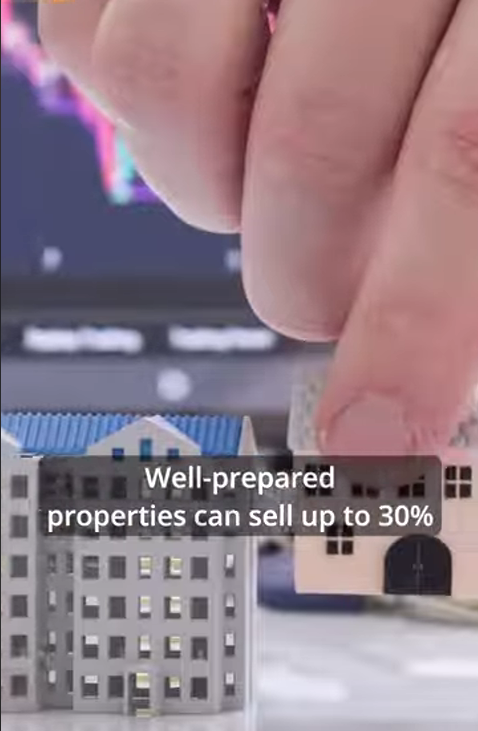
Well-prepared properties can sell up to 30% faster and at 5-10% higher prices.
The Strategic Value of Preparation
Is the work worth it? Yes. Presentation matters. Simple fixes and basic attention to looks help you beat other sellers. It works better than you’d think.
| Action | Impact on Buyer Perception |
|---|---|
| Decluttering | Makes rooms look bigger and more expensive. |
| Fresh Neutral Paint | Shows the place is clean and brightens everything up. |
| Professional Staging | Helps people see how to use the space. |
| Minor Repairs | Gets rid of things that make buyers worry about upkeep. |
Simple fixes, fresh paint, cleaning up, and staging help a lot.
You don’t need major renovations to get the most bang for your buck. Using diy tips can help you save money while getting your property ready for selling 30% faster.
Here’s the thing about selling fast and getting good money. You need to think differently. Focus on how your place looks. Stop waiting for someone to want it. Make them want it. In real estate and everything else, smart moves get you better results.
Behind the Aesthetics: Why Pretty Pays
In real estate, “nice to look at” gets written off as extra. But the data shows that looks actually make money. When you fix up a home for sale, you’re not just decorating. You’re making more cash.
Analyzing recently sold homes in your local market helps you determine your home value and set a competitive price, which is key to achieving the best price for your property. Various Home Staging Associations report that the return on investing in your property’s presentation is substantial. The statistics speak for themselves:
- Speed: Fixed-up homes sell up to 30% faster than ones left alone.
- Profit: These homes get 5-10% higher prices than messy ones.
If your house is worth millions, that 10% isn’t small change. It’s real money that beats what you spend on paint or a stager.
Well-prepared properties can sell up to 30% faster and at 5-10% higher prices.
The “Blank Canvas” Myth
Sellers often leave houses empty or untouched. They think it lets buyers imagine better. Wrong.
Most people can’t picture what an empty or messy room could be. Without furniture or some setup, buyers see problems. A scratch on the floor. A weird outlet. How tiny a room looks with no bed.
Fixing up tells the story. Instead of making buyers work to imagine it, you show them how to live there. You change “What would I do with this corner?” to “I can see myself reading here.”
For best results, use home staging tips like decluttering and staging key areas such as the master bedroom, and choose neutral colors to appeal to a wider range of buyers and create a blank canvas for potential homeowners.
The Direct Relationship: Effort and Equity
How your place looks and what it sells for connect directly. You can fix it up now, or wait longer for a buyer while you drop your price.
| Market Approach | Typical Outcome | Financial Impact |
|---|---|---|
| “As-Is” Listing | Long days on market; frequent low-ball offers. | High risk of price stagnation. |
| Clean & Decluttered | Steady interest; sells at market value. | Standard ROI. |
| Fully Prepared & Staged | Fast sale; high potential for multiple offers. | 5-10% price premium. |
Here’s what matters: How it looks affects the price. When you make your place look good, you’re not just making it pretty. You’re making it worth more. Proper staging can lead to a higher sale price, with properly staged homes earning an average of 5% more than non-staged homes.
Small upgrades = faster, better sales. Presentation pays.
Roadmap to Getting Your Property Market-Ready
To turn your property into a high-value asset, you need a tactical plan. Preparation isn’t about a total renovation; it’s about strategic updates that remove “red flags” and allow buyers to fall in love with the space. This roadmap applies to the entire home, including single-family homes, and is designed for sellers who want to get their property ready for selling 30% faster. Preparing a property for sale in 30 days or less requires a focused approach, prioritizing high-impact actions over major renovations.
Here is the four-phase roadmap to getting your property market-ready.
Phase 1: The “Invisible” Essentials and Pre-Listing Home Inspection
Before you worry about the decor, you must address the maintenance. Buyers are hypersensitive to signs of neglect. A leaky faucet or a cracked floor tile may seem minor to you, but to a buyer, they signal a house that hasn’t been cared for.
- Fix the Flaws: Silence squeaky doors, tighten loose cabinet handles, replace cracked tiles, and patch picture holes in the walls. These are low-cost fixes that prevent a buyer from mentally adding up “repair costs.”
- The Deep Clean: This goes beyond a daily sweep. Focus on the details that usually go unnoticed: scrub the grout lines, wash the windows inside and out to maximize natural light, and ensure the home smells neutral and fresh.
Consider scheduling a pre-listing home inspection to identify any major issues before listing, which can help facilitate a quicker sale and provide transparency to potential buyers.
| Tip: Prioritize repairs that a visible inspection will catch. Don’t give a buyer a reason to haggle on the price because of a visible Php1000 fix. |
|---|
Phase 2: The Visual Refresh
High-impact changes don’t have to be expensive. The goal here is to maximize the perceived volume and brightness of your home.
- The Power of Paint: A fresh coat of “Gallery White” or a soft neutral can make a room feel up to 20% larger. Re-painting with light, warm neutral tones provides a blank canvas for buyers and can yield a 107% ROI when selling a home. It hides scuffs and makes the entire property feel brand new.
- Kitchen Refresh: Painting kitchen cabinets and updating cabinet hardware are cost-effective ways to refresh the kitchen’s appearance. Painting cabinets can dramatically improve the look of your kitchen, and swapping out cabinet hardware or even spray painting existing pieces can enhance the space’s value without a full renovation.
- Lighting Strategy: Dark corners kill deals. Replace old, flickering bulbs with warm LEDs and pull back the curtains to maximize natural light. Bright homes feel safer, cleaner, and more expensive.
Small upgrades, fresh paint, decluttering, and professional staging make a big difference.
Phase 3: Decluttering and the “Hotel Feel”
Buyers aren’t just looking for square footage; they are looking for a lifestyle. To sell that lifestyle, you must remove yourself from the equation.
- Removing the “You”: Pack away family photos, diplomas, and quirky collections. Consider renting a storage unit to store personal items and excess furniture, making the space feel more open and appealing. You want the buyer to imagine their family in the house, which is hard to do when yours is staring back at them from the mantle.
- Creating Flow: If a room feels cramped, it’s likely because there is too much furniture. Remove excess pieces to improve “walkability.” Use a laundry basket to quickly gather kids’ toys and other clutter before showings, ensuring the home looks tidy and spacious.
- Aim for Aspirational: Think of a high-end hotel. It feels clean, curated, and open. Add neutral throw pillows to sofas and chairs to enhance the look of living spaces and create a welcoming, stylish atmosphere. By depersonalizing, you create an environment where the buyer can see their own future, not your past.
Decluttering your home can increase its value by up to 3%-5%.
Phase 4: Curating the Curb Appeal
First impressions start at the driveway, not the living room. The home’s exterior is crucial for getting the property ready for selling 30% faster, as curb appeal can make or break a buyer’s interest. If the exterior is lackluster, many buyers won’t even bother going inside.
- The Entryway: This is the most important “micro-moment” of the tour. Invest in a fresh welcome mat, polished door hardware, and a few healthy potted plants. A freshly painted front door and updated house numbers can significantly improve first impressions. Adding decorative elements like wreaths or topiary can enhance the appeal of a front porch.
- The Driveway and Path: Ensure these areas are power-washed and clear of debris. Mow the lawn, trim bushes, weed and landscape outdoor areas, and remove any debris to boost curb appeal. Adding seasonal plants can make the front porch look inviting. Cleaning the front yard and updating outdoor lighting will improve both the visibility and attractiveness of your home at night.
- The Dining Room: Don’t overlook the dining room as a key area that can influence buyer perception and home value. Staging, cleaning, depersonalizing, updating lighting, and clearly defining the dining room’s purpose can help buyers envision themselves in the space.
In property and in life, informed choices create lasting results. By following these phases, you transition from a “seller” to a “strategist.” You aren’t just selling a house; you are presenting a premium product that justifies a premium price.
Making the Smartest Move with Your Real Estate Agent
What sets a property that sits on the market from one that ignites a bidding frenzy is a well-crafted strategy, not mere luck. Engaging a professional stager can elevate your home’s appeal by skillfully arranging furniture, décor, and colors to captivate prospective buyers.
Establishing a clear budget for updates helps prevent overspending, while staying organized throughout the selling journey keeps your home in prime condition to impress potential buyers.
1. The Value of Informed Preparation
Informed preparation is the bridge between a stressful listing process and an effortless closing. When you address the “invisible” repairs, refresh the visual appeal, and curate the atmosphere, you remove the friction that prevents buyers from making an offer. You shift the conversation from “What’s wrong with this house?” to “How soon can I move in?”
The logic is simple:
- Small upgrades lead to faster, better sales.
- Strategic staging justifies a premium price.
- Confidence in your property leads to confidence at the negotiating table.
- Open houses attract more potential buyers and create opportunities for competitive offers.
Some of the best tips for preparing your home for sale include focusing on curb appeal, decluttering, and making minor repairs. Hiring a cleaning crew can help ensure your home is thoroughly cleaned before showings, making a strong first impression on buyers.
In property and in life, informed choices create lasting results.
2. Overcoming Home Selling Anxiety
Selling your home can feel overwhelming with all the memories and tasks involved. The key is to take it step by step: make a to-do list, tackle one thing at a time, and don’t aim for perfection, just a welcoming space for the next owner. Don’t hesitate to lean on friends, family, or professionals to lighten the load. Keep your focus simple: sell the house without the stress. Staying organized and positive makes the process smoother, and when you finally hand over the keys, you’ll feel proud and ready for the next chapter.
3. Photography and Listing
Today, your home’s first impression happens online, so quality photos are crucial. Hire a pro photographer who knows how to capture your home’s best angles and lighting, inside and out. Collaborate with your real estate agent to craft a listing that highlights your home’s unique features, upgrades, and lifestyle benefits. Include all the essentials, bedrooms, bathrooms, square footage, and improvements, to attract more buyers from the get-go.
4. Preparing for Showings
When it’s time to show your home, details make all the difference. Remove personal touches like family photos and kids’ artwork to help buyers envision their own lives there. Clear out extra furniture to open up space, and invest in a deep clean focusing on kitchens, bathrooms, and floors. Make sure all lights work and replace any dead bulbs; bright homes sell faster. Add simple touches like fresh flowers or a plant to create a warm, inviting atmosphere that resonates with buyers.
5. After the Sale
Once your home is sold, the work isn’t quite over. Stay in close contact with your agent to keep paperwork and inspections on track. Address any necessary repairs promptly and ensure a smooth handover of utilities and keys. Pay attention to the details and reflect on the experience; what went well and what you might do differently next time. Selling a home is more than a transaction; it’s closing one chapter and stepping confidently into the next. Stay organized, stay focused, and you’ll navigate it successfully.
Let’s make your next move your smartest one yet.
Success in the real estate market requires more than just a “For Sale” sign; it requires the right platform and expertise. HousingInteractive, the Philippines’ first property portal, delivers property solutions specifically designed to help you navigate this transition. Whether you are identifying the right upgrades for your neighborhood or looking to reach a qualified pool of buyers, we provide the tools to ensure your property stands out in a crowded market.
Don’t leave your biggest financial asset to chance. By prioritizing presentation and partnering with experts who understand the market data, you ensure that your home isn’t just seen—it’s sold. Implementing realistic strategies to raise your home’s resale value will maximize your return and attract serious buyers.