


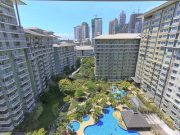
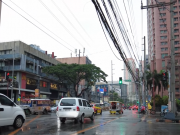











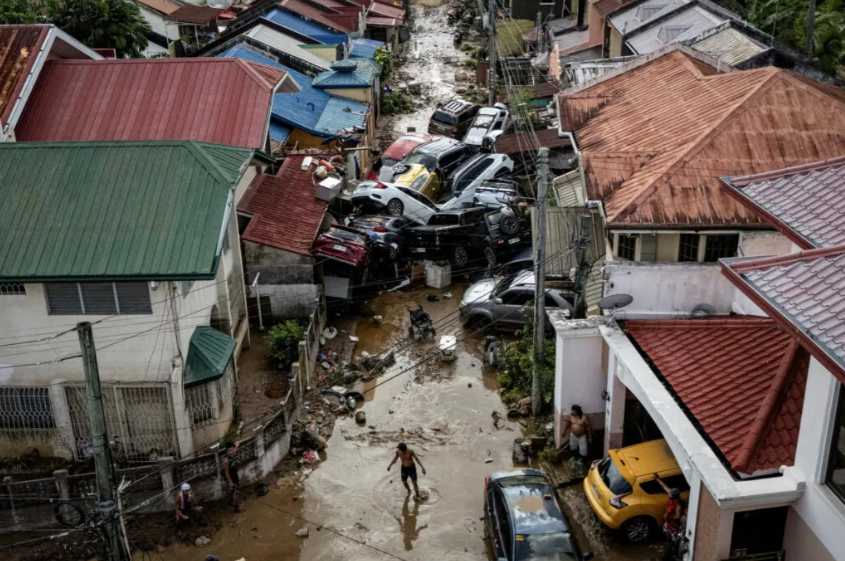
It’s that sound. You know the one heavy, rhythmic drumming on the roof that used to be cozy but now just makes your stomach drop. You start eyeing the street, wondering if the curb is still visible, or if this is the day the water finally wins.
For years, we just sighed, waded through it, and called it “resiliency.” But something has shifted. People aren’t just buying sandbags anymore; they’re asking questions. Big ones.
Let’s deep dive into why the conversation around flood control in the Philippines has finally hit a breaking point.
Beyond the Sandbags
The flood control scandal has ignited widespread outrage among Filipinos, who are increasingly demanding accountability from government officials and lawmakers. This long-standing issue involves the misuse of billions of pesos in public funds intended for flood control infrastructure, fueling public frustration and calls for justice. The current Marcos administration has faced criticism over its handling of the scandal, with many urging for greater transparency and more effective measures to combat corruption. Filipinos are vocal in their condemnation of corrupt politicians, emphasizing the urgent need for good governance and accountability within the Philippine government to restore public trust and ensure proper management of flood control projects.
The Corruption Problem
Corruption remains a pervasive and deeply entrenched issue within the Philippine government, significantly impacting the effectiveness of flood control projects and public trust. The ongoing flood control scandal has brought this problem into sharp focus, revealing systemic failures and the urgent need for comprehensive reforms.
Key Aspects of the Corruption Problem
- Widespread Involvement: Numerous government officials, lawmakers, and contractors have been implicated in schemes involving the misuse of billions of pesos allocated for flood control infrastructure.
- Misuse of Public Funds: Public funds meant for critical flood control projects have often been diverted for personal gain, resulting in ghost projects, substandard construction, and incomplete infrastructure.
- Public Betrayal: Many Filipinos feel a deep sense of betrayal as they witness the contrast between their daily struggles with flooding and the lavish lifestyles of some officials and contractors involved, often highlighted by media exposés.
- Lack of Accountability: Despite public outrage, prosecution and conviction rates for corrupt officials remain low, fueling skepticism about the justice system’s effectiveness.
- Systemic Nature: Corruption in flood control is not isolated but part of a broader pattern of graft that affects multiple sectors, undermining good governance and development.
1. The “Resiliency” Trap: From Survival to Demand for Change
The Myth of Filipino Resiliency
For decades, Filipinos have been praised for their “resiliency” in the face of natural disasters. The image of smiling children paddling through flooded streets became a symbol of strength and optimism. However, beneath this narrative lies a harsh reality: exhaustion and frustration.
- The cultural narrative: Filipinos are often described as “waterproof,” able to endure floods with a smile. This “resiliency” is frequently used to justify inadequate government action by framing the ability of citizens to survive disasters as a substitute for effective, proactive governance. Instead of investing in robust infrastructure and preparedness, governments often rely on the community’s capacity to “bounce back” on its own, allowing officials to escape accountability for systemic failures.
- Underlying fatigue: While the image of the resilient Filipino has been celebrated, many are quietly exhausted by the recurring floods that disrupt their lives, livelihoods, and communities year after year. The public is increasingly rejecting the notion that resilience alone is enough, demanding that government institutions step up with effective flood control measures rather than relying on the people’s endurance.
- Emotional toll: Beyond physical inconvenience, floods cause emotional stress and anxiety, especially for families who repeatedly lose property and face displacement. For many Filipinos, frequent flooding means lost income, damaged businesses, and increased costs for repairs and health issues, deepening poverty cycles.
The Shift in Public Perception
There is a growing shift from merely surviving floods to questioning why such disasters continue to happen year after year. The shift from passive acceptance to active demand signals a growing political awareness and civic engagement among Filipinos, who now see flood control as a matter of good governance and human rights.
- From acceptance to demand: Citizens are moving from asking “How do we survive this?” to “Why is this still happening?” The viral images of children smiling in floodwaters are now seen as a sign of failed governance rather than inspiration.
- Accountability calls: More Filipinos are demanding transparency and responsibility from government officials and agencies tasked with flood control. Revelations of widespread corruption in flood control projects have intensified public scrutiny and skepticism about government efforts. Many flood control projects are poorly executed, using substandard materials or remaining incomplete, leading to recurring floods.
- Climate change impact: The increasing severity and frequency of typhoons and heavy rains due to climate change have exacerbated flooding, making effective flood control more urgent. Citizens are increasingly vocal on social media and in protests, calling for reforms and better flood management policies. There is growing advocacy for nature-based solutions and science-driven flood management approaches rather than solely relying on traditional engineering methods.
- Hope for change: Despite frustrations, Filipinos are channeling their anger into constructive action, pushing for a future where floods no longer disrupt lives and livelihoods.
This shift isn’t just technical. It’s cultural and political. We need to demand more than quick fixes and ribbon-cuttings. We need vision, integrity, and design that serves people first.
— Urban Planner, Landscape Architect, Don Manlangit
2. The Real Estate Reality Check: When Homes Become Flood-Prone
Emotional and Financial Toll on Homeowners
Owning a home is a significant investment for many ordinary Filipinos, and discovering that it lies in a flood-prone area can be devastating. Flood damage not only leads to substantial financial losses and reduced property values but also causes emotional distress due to the constant threat of flooding. Securing affordable flood insurance is often challenging, leaving families vulnerable, while repeated flooding can force community displacement, disrupting social networks and local economies. Additionally, properties in these areas may face long-term depreciation, stigmatization, and difficulties in resale or rental, compounded by limited government assistance and environmental degradation.
Changing Priorities Among Property Buyers
As awareness of flood risks grows, prospective homeowners are becoming more cautious and informed. Buyers now commonly request elevation certificates, drainage plans, and detailed flood risk disclosures from developers and sellers. Access to community flood data and concerns about insurance availability influence purchasing decisions, with many factoring in potential impacts on resale value. There is also a growing demand for stronger legal protections that require mandatory flood risk disclosure during transactions, alongside increasing pressure on developers to incorporate sustainable flood control features into new housing projects.
Several key priorities have emerged:
- Elevation Certificates and Drainage Plans: Buyers increasingly request official documentation on property elevation and detailed flood mitigation measures from developers to assess flood vulnerability.
- Risk Disclosure and Community Data: There is a rising expectation for developers and sellers to disclose flood history and risk assessments. Additionally, accessible and up-to-date flood maps from local governments are becoming essential tools in purchasing decisions.
- Insurance and Resale Considerations: Prospective homeowners factor in the availability and cost of flood insurance, while also considering the long-term impact of flood risks on property value and marketability.
- Legal and Developer Accountability: Calls for stronger regulations mandating flood risk disclosure during transactions are growing, alongside pressure on developers to incorporate sustainable flood control features in new housing projects.
- Public Awareness and Market Trends: NGOs and community groups are actively educating buyers about flood risks and mitigation strategies, contributing to a shift in the real estate market toward flood-resilient homes and climate-conscious developments.
Emergence of Flood-Resilient Housing Developments
In response to these challenges, flood-resilient developments are gaining momentum. Innovative designs featuring elevated foundations, permeable landscaping, and green infrastructure—such as green roofs, rain gardens, and bioswales—are being integrated to manage stormwater naturally. Collaborative efforts between local governments and developers ensure tailored flood mitigation strategies, supported by public education programs and technological advancements like early warning systems. Policy measures, including ordinances mandating flood risk assessments and financial incentives for resilient features, reflect a shift toward proactive, sustainable approaches that prioritize safety, environmental sustainability, and community well-being in flood-prone areas.
The real estate sector is adopting innovative approaches:
- Flood-Resistant Designs: Developers are integrating features such as elevated foundations, permeable landscaping, green roofs, rain gardens, and bioswales to manage stormwater naturally and reduce runoff.
- Community and Government Collaboration: Local organizations and governments work together to improve drainage, implement flood barriers, and ensure new developments include tailored flood mitigation strategies.
- Sustainable Building Practices: Eco-friendly materials and construction methods that reduce environmental impact and enhance water absorption are becoming more common.
- Technological and Policy Support: Smart sensors, early warning systems, and flood risk assessment ordinances support proactive flood management, while financial incentives encourage the adoption of resilient features.
- Long-Term Vision: These initiatives reflect a shift toward preventive, sustainable approaches prioritizing safety, environmental stewardship, and community well-being in flood-prone areas.
Collective Action and Public Advocacy
Flood control issues have galvanized Filipinos to unite and demand systemic change:
- Historical Spirit of Unity: Echoing the EDSA People Power Revolution, the current flood control scandal has sparked mass protests and social media campaigns calling for accountability.
- Directed Public Anger: Citizens channel their frustration into advocacy for science-based flood management, watershed protection, and sustainable policies rather than temporary fixes.
- Community Empowerment: Grassroots groups and neighborhood networks actively share information, lobby local officials, and participate in flood resilience initiatives.
- Policy Impact: Public pressure has led to increased scrutiny of flood control projects and the creation of platforms for citizen reporting and participation.
Hope and Transparency as Catalysts for Change
Despite challenges, hope and transparency remain vital in driving reform:
- Transparency Imperative: Open access to project budgets, contractor information, and audit reports is essential to prevent corruption and restore public trust.
- Government Accountability: Independent commissions, legislative oversight, and citizen participation platforms play critical roles in monitoring flood control projects.
- Optimism for Progress: Initiatives like Project NOAH’s science-based flood risk assessment and public reporting tools demonstrate potential for improved flood management.
- Empowering Citizens: Hope motivates individuals and communities to question the status quo and advocate for a safer, flood-resilient Philippines.
Together, these efforts aim to transform public outrage into meaningful action, ensuring flood control projects protect lives and communities rather than enrich corrupt interests.
| Factor | Before | After Awareness Shift |
|---|---|---|
| Buyer inquiries on flood risk | Rare | Increasingly common |
| Demand for elevation certificates | Low | High |
| Interest in flood-resilient homes | Minimal | Growing |
3. Voices Rising: The Core Question Behind Flood Project Outrage
The EDSA Spirit: Collective Action for Change
Historically, Filipinos have united during times of crisis to demand reform, as seen during the EDSA People Power Revolution. This spirit of collective action has become a powerful force in the current flood control scandal, where widespread public frustration has coalesced into a unified call for justice and accountability.
- Consolidated frustration: Years of neglect, mismanagement, and corruption in flood control projects have culminated in a collective outcry that echoes the historic unity of the EDSA movement. Ordinary Filipinos, community leaders, and activists have come together, transcending social and political divides, to demand systemic change.
- Mass mobilization: Protests, both physical and digital, have amplified the voices of those affected. Social media campaigns, hashtags, and viral posts have brought national and international attention to the issue, while peaceful demonstrations and rallies have filled streets from Metro Manila to provinces like Bulacan and Pasig City, highlighting the widespread impact of the scandal.
From Voices to Vision: Beyond Band-Aid Solutions
Public anger is no longer just an expression of discontent; it is being channeled into constructive demands for long-term, sustainable flood management strategies that address the root causes of flooding rather than temporary fixes.
- Watershed management: Advocates emphasize the importance of comprehensive watershed and river basin management to restore natural water flow and reduce flood risks. This approach involves reforestation, wetland restoration, and the protection of natural buffers that absorb and slow floodwaters.
- Science-based planning: Support for initiatives like Project NOAH, which utilizes advanced data analysis, weather forecasting, and flood risk mapping, is growing. These science-driven approaches allow for better prediction, planning, and response to flood events, moving beyond reactive measures to proactive management.
- Nature-based solutions: There is a rising call for integrating green infrastructure such as mangrove replanting, urban green spaces, and “sponge parks” that can absorb excess rainwater, complementing traditional engineering projects with environmentally sustainable methods.
Directed Anger: A Blueprint for Change
The Filipino phrase “galit na may direksyon” — meaning “anger with direction” — perfectly encapsulates the current public sentiment. This focused fury is not aimless but is directed toward actionable reforms and systemic improvements.
- Policy impact: The growing public pressure has led lawmakers and government agencies to reconsider existing policies and budgets. There is an increased push for transparency in the National Expenditure Program and General Appropriations Act processes to prevent misuse of unprogrammed funds and late budget insertions.
- Community involvement: Grassroots organizations and citizen groups are demanding a seat at the table in flood management discussions, advocating for participatory governance that includes local knowledge and priorities.
- Accountability mechanisms: Calls for stronger enforcement of laws, faster prosecution of corrupt officials, and independent oversight bodies are becoming central to the reform agenda.
Speaking up is the first step to lifting everyone up.
4. The “Not My Problem” Myth is Dying: Flooding Affects Everyone
The Great Equalizer: Floodwaters Know No Boundaries
Flooding impacts all social classes and neighborhoods, disproving the myth that it only affects low-income areas.
- High-end villages: Even affluent areas in Metro Manila have experienced severe flooding.
- Bulacan and beyond: Floodwaters disrupt daily life across provinces, affecting diverse communities.
Community Power: Grassroots Advocacy
Neighborhood groups and local organizations have transformed into powerful platforms for flood advocacy.
- Information sharing: Residents exchange flood alerts, photos, and calls for action.
- Collective voice: Communities lobby local officials for better drainage and infrastructure maintenance.
Examples of Community Impact
- Barangay initiatives: Some barangays have organized clean-up drives to clear waterways.
- Local government partnerships: Collaboration between residents and LGUs to implement small-scale flood mitigation projects.
5. Hope as a Practical Tool: Fueling Action for a Flood-Free Future
The Role of Hope in Advocacy
Despite cynicism, hope remains a critical motivator for citizens demanding change.
- Belief in possibility: Hope drives people to question the status quo and seek solutions.
- Ripple effect: Individual inquiries can spark broader community and governmental responses.
From Questions to Policy Change
- Homeowners’ influence: One homeowner’s demand for transparency can lead to involvement from the HOA and city council.
- Policy shifts: Sustained public pressure has led to the creation of independent commissions and audits.
Inspiring Examples
- Project NOAH funding: The 2026 budget allocated ₱1 billion to science-based flood management planning.
- Public participation: Platforms like “Sumbong sa Pangulo” enable citizens to report anomalies in flood projects.
The Need for Transparency
Transparency is a cornerstone in tackling the ongoing flood control scandal in the Philippines. With public trust severely eroded by the misuse of billions of pesos allocated for flood control infrastructure, clear and open governance has become more crucial than ever. Accountability matters profoundly—it is the key to restoring confidence, ensuring responsible management of public funds, and preventing future abuses.
Why Transparency Matters
- Public Accountability: Citizens have the right to know how their taxes are spent, especially when large-scale projects fail to deliver promised results.
- Prevention of Corruption: Transparent processes reduce opportunities for graft, ghost projects, and collusion between government officials and contractors.
- Restoring Trust: Transparency is essential for rebuilding trust between the government and fellow Filipinos, especially after years of widespread corruption scandals.
- Improved Project Outcomes: Open documentation and oversight encourage better planning, execution, and maintenance of flood control projects.
Issues with Current Transparency
The National Expenditure Program (NEP) and the General Appropriations Act (GAA) have been criticized for allowing so-called unprogrammed funds and insertions without proper oversight. Many flood control projects were added late in the budget process, sometimes without the knowledge of local government units or proper technical evaluation.
| Transparency Challenge | Impact on Flood Control Projects |
|---|---|
| Lack of detailed project data | Incomplete or non-existent flood control infrastructure |
| Unprogrammed funds misuse | Funds diverted to “ghost projects” or overpricing |
| Poor public access to budgets | Limited citizen oversight and difficulty in tracking funds |
| Weak enforcement of reporting | Contractors and officials evade accountability |
The Bulacan Flood Control Scandal
In Bulacan, a flood-prone province near Metro Manila, a ₱55 million flood control project was reported as completed on paper but was found to be nonexistent upon inspection. President Marcos Jr. personally visited the site and condemned the falsification, calling it “economic sabotage.“
The “Nepo Babies” Phenomenon
Public fury has also been stoked by the extravagant lives of the children of implicated officials and contractors, often referred to as “nepo babies.” Their lavish lifestyles, showcased on social media, starkly contrast with the everyday hardships of ordinary Filipinos suffering from floods.
Public Demands for Transparency
Surveys such as the Pulse Asia Survey reveal that most Filipinos (54%) trust the media more than government institutions to expose corruption in flood control projects. The public demands:
- Full disclosure of flood control project budgets, contractors, and timelines.
- Open access to audit reports and investigation findings.
- Real-time updates on project status through digital platforms.
- Clear accountability mechanisms for officials and contractors.
Steps Toward Greater Transparency
- Comprehensive Project Documentation: Every flood control project should have publicly accessible records detailing scope, budget, contractor, and progress.
- Citizen Participation Platforms: Websites like “Sumbong sa Pangulo” enable citizens to report anomalies and monitor projects.
- Independent Auditing: Regular and independent audits by bodies such as the Office of the Ombudsman and the Independent Commission on Infrastructure (ICI) must be made public.
- Legislative Oversight: The House of Representatives and Senate should enforce stricter budget scrutiny, especially concerning unprogrammed funds and late insertions.
- Use of Technology: Geographic Information System (GIS) mapping and real-time monitoring can help track project implementation and detect irregularities.
The Way Forward
Transparency is not just a procedural requirement but a fundamental tool for good governance and effective flood control. Without it, the cycle of corruption and ineffective infrastructure will continue, leaving millions of Filipinos vulnerable to devastating floods.
By embracing transparency, the Philippine government can transform public outrage into a powerful force for reform, ensuring that flood control projects truly protect communities rather than enrich corrupt officials.
Government Response
The Philippine government has taken several steps in response to the widespread flood control corruption scandal, but public skepticism remains high regarding the effectiveness and sincerity of these efforts.
Key Actions Taken
- Independent Commission on Infrastructure (ICI): Established to investigate allegations of corruption and recommend charges against those involved. However, public trust in the ICI remains low, with only 18% of Filipinos expressing confidence in its ability to address the scandal, according to recent surveys.
- Presidential Vows: President Ferdinand Marcos Jr. has publicly condemned the corruption, pledging to hold government officials and contractors accountable. In his national address, Marcos Jr. emphasized the urgency of cracking down on corrupt practices in flood control projects.
- Legislative Investigations: Both the House of Representatives and the Senate have launched inquiries into the scandal. The Senate, with a 24% public trust rating on this issue, has held hearings uncovering ghost projects, overpriced contracts, and connections between lawmakers and contractors.
- Audit and Transparency Measures: The Philippine Department of Public Works and Highways (DPWH) was ordered to submit a comprehensive list of flood control projects for auditing. This revealed that a significant portion of the budget was awarded to only a few contractors, raising concerns about collusion.
Challenges and Criticisms
Despite these efforts, many Filipinos remain doubtful about the government’s ability to enact meaningful reform:
| Issue | Description |
|---|---|
| Limited Transparency | Investigations have been criticized for a lack of openness, with some hearings held behind closed doors. |
| Political Interference | Key lawmakers linked to contractors have complicated impartial investigations. |
| Slow Prosecution | Few arrests or convictions have been made, leading to public frustration and calls for faster action. |
| Institutional Weakness | The ICI is understaffed and lacks full authority, limiting its impact. |
Public Sentiment and Calls for Action
- A Pulse Asia survey found that 54% of Filipinos trust the media more than government institutions to expose corruption in flood control projects, highlighting the lack of confidence in official channels.
- Many citizens demand that family members of implicated officials, including former congressmen and House speakers, be investigated to ensure accountability.
- Calls for good governance emphasize the need for a master plan for flood control that integrates transparency, science-based approaches, and community involvement.
- Advocates urge the government to move beyond reactive measures and implement proactive policies to prevent future corruption scandals.
Moving Forward: Recommendations
- Strengthen Independent Bodies: Provide the ICI and the Office of the Ombudsman with greater resources and authority to conduct thorough investigations.
- Enhance Transparency: Mandate public disclosure of all infrastructure projects, budgets, and contractor details in real-time.
- Accelerate Legal Proceedings: Fast-track the prosecution of corrupt officials and contractors to restore public trust.
- Engage Civil Society: Encourage collaboration with NGOs and media to monitor projects and report anomalies.
- Implement a Comprehensive Master Plan: Develop a scientifically informed flood control strategy that addresses root causes and incorporates nature-based solutions.
By addressing these areas, the Philippine government can begin to rebuild faith among Filipinos and ensure that public funds intended for flood control truly serve their purpose—protecting lives and livelihoods rather than lining the pockets of corrupt officials.
Transparency, Accountability, and Justice
Addressing the corruption problem in flood control requires a sustained, multi-faceted effort involving government reform, public vigilance, and a commitment to good governance. Only through transparency, accountability, and justice can the Philippine government rebuild trust and ensure that public funds serve their intended purpose — protecting lives and livelihoods from devastating floods.
As climate change intensifies, the cost of failed infrastructure is no longer just a financial loss; it is a direct threat to the safety of our homes and the stability of our communities.
HousingInteractive: Prioritizing Safety in an Uncertain Climate
We believe that your home should be your safest harbor. While the nation works toward greater accountability in public infrastructure, we help you take immediate, proactive steps to protect your investment. As the Philippines’ pioneer property portal, we provide the tools and verified data you need to identify locations that offer natural elevation and superior master-planned drainage.
HousingInteractive, the Philippines’ first property portal, delivers property solutions that help you navigate environmental risks with confidence. Don’t wait for infrastructure promises—find your flood-free sanctuary and secure your family’s future with us today!
| The state of flood control directly affects your property value and safety. Our new series by HousingInteractive exposes the truth: corruption and ‘ghost’ projects have wasted billions, needlessly putting communities and real estate assets at risk. To protect your investment and demand real solutions, read and follow these articles. Next: Floods Don’t Choose Victims — But Our Solutions Can |