













Flood risk management is essential for communities situated near rivers, seas, and hills that are increasingly vulnerable to floods intensified by climate change. It involves assessing the likelihood of flood occurrence and understanding the potential consequences to develop effective risk reduction strategies through resilience and adaptive capacity.

A good flood risk system looks at factors such as the likelihood of flood occurrence, how increased land development escalates the risk, and the critical importance of keeping communities well-informed. Providing people with the right resources, guidance, and support empowers them to build resilience and better manage flood events. This approach minimizes damage to homes, roads, health, and daily life. Effective flood management relies on comprehensive community planning, improved infrastructure, and strong collaboration with local government to prepare for and mitigate the impact of future floods. Unfortunately, the potential of these efforts is often undermined by the missing billions; funds allocated for flood control projects that remain unspent, misused, or lost to corruption, hindering the progress toward truly resilient communities.
Flood Risk Management Strategies
Honestly, we see the headlines after every major typhoon, right? Another disaster, millions of pesos in damage, and then another promise of a “mega project” to fix everything forever. And you just think, “Will this ever really change?” Maybe it’s just me, but sometimes the sheer scale of the problem: the geography, the climate change, the countless people affected, makes you feel completely helpless. You start to doubt if any amount of concrete can save us, especially when you see roads that flood anyway, cutting off communities and isolating people when they need help most.
Flood risk management strategies involve strengthening social connections, offering self-protection training, and promoting sustainable river catchment management. These approaches focus on clear risk communication, supporting diverse populations, and integrating local knowledge to boost community resilience. However, challenges such as corruption, state neglect, and poor infrastructure quality often hinder flood control projects and disaster risk reduction efforts. Public frustration has grown due to revelations of fraudulent flood control projects involving collusion between officials and contractors, shifting accountability from communities to institutions. Despite these setbacks, building adaptive capacity remains essential, enabling communities to effectively respond to recurring floods, rising waters, and the impacts of climate change, including frequent road flooding.
The Project Landscape – What They Are & Where They Fall Short
The Necessity of Concrete
We have to start here: the necessity is undeniable. We’re an archipelago sitting in the path of 20+ tropical cyclones a year, and our population density in urban centers like Metro Manila and Cebu is intense. We need those massive pumps, the river dredging to keep our major waterways flowing, and seawalls to protect our coasts. These are the defensive walls we have to build against nature’s increasingly powerful blows.
But here’s the edge, the part that makes my blood boil sometimes: too often, these broken promises of flood control projects are done to a community, not with them. They’re top-down, planned in a conference room far from the water’s edge. The initial thought process often feels like it’s “project muna bago tao” (Project first before people).
Think about the families displaced by a dike expansion, especially those living in informal settlements along the riverbanks. They’re forced out because their homes suddenly stand in the way of “progress.” These are often the most vulnerable people in the country, and their sudden, desperate struggle for shelter becomes a hidden, uncounted cost of the project’s supposed success. Did the new dike protect the city? Yes. Did it devastate a few hundred families in the process? Also yes. This is a stark example of what happens when flood control turns into a business, where profit and development overshadow the well-being of at-risk communities.
We’ve been trying to conquer the water with money and machines. We’ve fought it like an enemy. But maybe, just maybe, we need to stop just fighting the water and start channeling the power of the people with compassion. Because the water always wins in the end, but the people who know how to live with it, who know its rhythm—they survive.
Building Flood Resilience: Key Principles and Community Empowerment
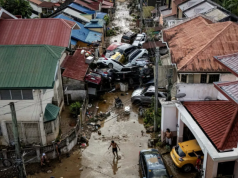
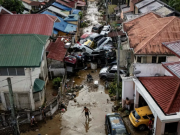
This is where the story truly shifts. The flood recedes, the mud is everywhere, and that’s when the real work begins: the one that isn’t funded by a government loan or a foreign grant. It’s the spontaneous, unpaid, beautiful human reaction, especially from those who get left behind when floods hit.
The sight of it is heartbreaking but also miraculous: Families rebuild, kids go back to school, neighbors share what little they have.
That human spirit is unstoppable, isn’t it?
It’s not just a nice thought; this is our actual, organic, rapid-response infrastructure in action. This is the foundation we should be building on.
This realization grounds the conviction that must drive our planning:
Tao muna bago proyekto.
That means providing tangible, dignified aid and a clear, stable relocation plan before the first shovel ever hits the ground for a project that displaces people.
Building flood resilience is a multifaceted process that requires transparency, accountability, and active community involvement. These elements are crucial to fostering climate resilience and reducing vulnerability among populations exposed to flood risks. The following explores essential aspects of building effective flood resilience.
1. Transparency and Accountability in Flood Resilience
Transparency in planning and implementation of flood resilience initiatives ensures that all stakeholders, especially vulnerable communities, are informed and can trust the processes affecting their safety and livelihoods. Accountability mechanisms hold government officials, contractors, and organizations responsible for delivering on their commitments, preventing corruption and substandard infrastructure development that can undermine resilience efforts.
2. Inclusive Flood Resilience Efforts
Flood disasters impact communities in diverse and complex ways, often disproportionately affecting vulnerable groups such as women, children, the elderly, and marginalized populations. Inclusive flood resilience efforts prioritize addressing the full spectrum of natural disaster impacts by integrating the needs and voices of these vulnerable communities into disaster preparedness and response strategies. This approach ensures equitable access to resources, safe shelters, and recovery assistance.
3. The Role of Women in Flood Resilience
Women’s involvement in flood resilience is critical to designing solutions that meet the needs of all affected individuals. Women often bear unique burdens during flood disasters, including caregiving responsibilities and exposure to gender-based risks in evacuation centers. Empowering women as co-designers of flood preparedness plans and as first responders enhances the effectiveness of early warning systems and ensures that information reaches every household, improving overall community safety.
4. Community-Based Action Plans and Local Knowledge Integration
Community-based action plans are foundational to building flood resilience. These plans emphasize effective risk communication tailored to local contexts, support for diverse populations, and the integration of indigenous and local knowledge. By involving community groups in the development and execution of these plans, flood resilience strategies become more relevant, culturally sensitive, and sustainable.
The Power of Bayanihan
Honestly, when everything’s underwater, who really saves you? Not a bureaucrat stuck in traffic across town. It’s the guy next door with a small boat, or the woman passing out lukewarm coffee and dry towels from a small covered porch. That’s why Bayanihan is our best defense. It’s our original, deeply embedded, community-owned disaster management plan. Look, we need to respect that spirit, resource it, and integrate it into formal plans, not just treat it like a lovely cultural sideline.
What is Bayanihan?
Bayanihan is a Filipino tradition of communal unity and cooperation, especially during times of crisis. Rooted in centuries of shared hardship and mutual support, it embodies the principle that ordinary people come together to help one another without expecting anything in return. During floods, this spirit manifests in neighbors rescuing stranded families, sharing resources, and collectively cleaning up after the waters recede. It’s a powerful form of grassroots disaster response that significantly contributes to community resilience.
1. Bayanihan as a Community-Led Disaster Response
In flooded areas, formal disaster response efforts can be delayed or stretched thin. Bayanihan fills this gap by mobilizing local volunteers who know their community intimately and can act swiftly. These spontaneous first responders provide immediate aid—whether it’s evacuating vulnerable neighbors, distributing food and water, or offering emotional support. Their involvement reduces the burden on government officials and first responders, making disaster response more effective and inclusive.
2. Integrating Bayanihan into Formal Disaster Preparedness Plans
To build truly resilient communities, disaster risk reduction strategies must recognize and incorporate Bayanihan. This means supporting community participation by providing training, resources, and coordination channels that empower local groups. Evacuation plans and early warning systems should be designed with input from these community networks to ensure they are practical and culturally appropriate. By bridging traditional practices with modern infrastructure development, we can reduce risk and enhance adaptive capacity.
3. Challenges and the Way Forward
Despite its strengths, Bayanihan faces challenges such as limited resources and the risk of volunteer fatigue. To sustain this vital community participation, government officials and organizations must invest in capacity-building and establish clear communication frameworks. Encouraging collaboration between formal agencies and grassroots groups will ensure that the spirit of Bayanihan not only survives but thrives as a cornerstone of flood resilience.
Behind every flood is a story of resilience powered by the collective heart of communities. Bayanihan reminds us that the strength to overcome disasters lies not just in concrete walls or technology but in the unity and compassion of ordinary people.
What True Leadership Looks Like
The story of resilience isn’t a passive one where we just survive and wait for the next storm. It’s active. It’s exhausting. It’s hard. And it’s a story told through millions of small, tough choices made in the immediate, muddy aftermath of a crisis. It’s a nation repeatedly choosing to rebuild, proving that accountability matters at every level: from government officials to community leaders.
And that brings us back to leadership. Not just the people in suits signing checks, but the leaders in every neighborhood who organize the cleanup, who lead the way with a broom and a kind word.
True leadership is seen in every hand that helps.
So what can you do? You don’t have to build a dike, obviously. But the next time the rain hits hard and the reports start coming in, look around. Check on your neighbor, especially the single parent or the elderly person who can’t lift the furniture anymore. Donate your time or money to a hyper-local effort, not just the big national charities. Use your voice to push your local officials to consider the “tao first” in their next development plan.
We build our future not just by fighting the water, but by lifting each other out of the mud. That’s a project we can all take on.
HousingInteractive: Building Communities with Resilience and Malasakit
We believe that true community resilience is built on proactive planning and mutual support, which starts with securing a safe and reliable home base.
HousingInteractive, the Philippines’ first property portal, delivers property solutions that prioritize the safety and security of your family and community. Partner with us to find resilient properties in well-planned areas today!
| The state of flood control directly affects your property value and safety. Our new series by HousingInteractive exposes the truth: corruption and ‘ghost’ projects have wasted billions, needlessly putting communities and real estate assets at risk. To protect your investment and demand real solutions, read and follow these articles. Next: Why Filipinos Speak Up |