


















Buying a home is supposed to be the “we finally made it” moment. You’ve saved for years, skipped the expensive coffees, and maybe even taken on a side hustle. But here, that dream can turn into a nightmare faster than you can sign a notary block.
I’m talking about the “Double Sale” or the “Fake Title.” It’s the kind of thing that keeps buyers up at night, and honestly? It should.
Here is a breakdown of how to protect yourself, written like a roadmap so you don’t end up lost in the legal woods.
What is a Land Title?
A land title is a document that proves ownership of a particular parcel of land or real property. Verifying the authenticity of land titles is essential to avoid falling victim to fake title scams. The Regional Trial Court and other judicial bodies play a crucial role in resolving disputes related to land titles. Understanding the concept of land titles and their importance in property transactions can help prevent double sales and other fraudulent activities.
The Dangers of Fake Land Titles and Forged Deeds
Fake land titles and forged deeds are fraudulent documents that falsely claim ownership over real property. These documents are often created to deceive unsuspecting buyers into purchasing land or property that the seller does not lawfully own. Such scams can involve forged signatures, counterfeit certificates of title, or manipulated owner’s duplicate certificates. Because these documents appear legitimate at first glance, they pose a significant threat to anyone involved in real estate transactions.
1. Financial Losses and Risks
Purchasing property based on a fake title or forged deed can lead to significant financial losses. Buyers may pay reservation fees, down payments, or even full payments for properties they do not legally own. Once the fraud is discovered, recovering these funds can be difficult and time-consuming. Additionally, buyers may unknowingly assume responsibility for unpaid real estate taxes, mortgages, or liens attached to the property, further increasing their financial burden.
2. Lengthy and Costly Legal Battles
Victims of fake land titles often face protracted legal disputes to assert their ownership rights or reclaim lost funds. These cases may involve filing civil cases for reconveyance, annulment of sale, or damages. Navigating the Philippine legal system requires patience and resources, as cases can take years to resolve, especially when multiple parties claim ownership of the same property.
3. Civil Liability and Criminal Implications
In some instances, buyers may become embroiled in civil liability or criminal cases if they are found to have engaged in transactions involving fraudulent documents, even unknowingly. The Revised Penal Code and other laws, such as the Property Registration Decree and Republic Act No. 10951, impose penalties for falsification, estafa (swindling), and other offenses related to fake titles. Buyers should be aware that ignorance of the fraud does not always exempt them from legal consequences.
4. Impact on Credit and Future Transactions
Having a property involved in a double sale or title dispute can negatively affect a buyer’s credit standing and reputation. It may also complicate future property transactions, as banks and financial institutions require clear and valid titles for mortgage approvals. Buyers may find themselves unable to secure loans or sell the property until the legal issues are resolved.
Legal Remedies and Professional Assistance. To mitigate these risks, buyers should seek immediate legal remedies upon discovering a fake title or forged deed. This may include filing a separate civil action for damages, rescission of contract, or specific performance. Consulting with a qualified real estate lawyer experienced in handling cases involving fraudulent land titles is crucial. Legal professionals can guide buyers through the process, help gather relevant documents, and represent their interests in court or before government agencies such as the Registry of Deeds and the Land Registration Authority.
Paano kung malaman mong fake pala ang title ng bahay na binili mo?
Always verify the Transfer Certificate of Title (TCT) with the Registry of Deeds before paying.
By understanding the financial and legal consequences of fake titles and forged deeds, buyers can appreciate the importance of vigilance and due diligence in real estate transactions, thereby protecting their investments and avoiding becoming the next victim of a double sale.
Role of the Supreme Court and Legal Precedents
The Supreme Court of the Philippines plays a pivotal role in shaping the legal landscape surrounding fake land titles and double sale disputes. Through its rulings, the Court has established important principles that guide buyers, sellers, and courts in resolving conflicts involving questionable land titles.
1. Emphasis on Due Diligence
One of the Supreme Court’s key messages is the critical importance of due diligence in real estate transactions. Buyers and sellers are urged to thoroughly verify the authenticity of certificates of title and related documents before proceeding with any sale or transfer. This includes checking the Registry of Deeds for the original certificate, ensuring the title is clean, and confirming that no adverse claims or encumbrances exist on the property.
2. Distinguishing Good Faith from Bad Faith
The Court has clarified the distinction between innocent holders who act in good faith and those who engage in bad faith or fraudulent conduct. Good-faith buyers who rely on a clean and registered title without knowledge of defects are generally protected under the law. Conversely, parties found to have acted in bad faith or with knowledge of irregularities may be denied legal protections and held liable for damages.
3. Protections Under the Property Registration Decree and Civil Code
The Supreme Court has reinforced the legal safeguards provided by the Property Registration Decree (Presidential Decree No. 1529) and the Civil Code. These laws establish the procedures for registration, the binding effect of registered titles, and remedies available to aggrieved parties. The Court has emphasized that the act of registration is an operative act that conveys ownership and serves as constructive notice to all persons, thereby protecting the lawful owner thereof.
4. Judicial Precedents on Double Sales and Fake Titles
Through landmark cases, the Supreme Court has addressed issues such as double sales, forged duplicate certificates, and subsequent registrations procured through pretenses. The Court has upheld the principle of “primus tempore, potior jure” (first in time, stronger in right), favoring the first buyer who registers the property in good faith. It has also clarified that a void or forged title cannot be the source of a valid title unless the holder is an innocent purchaser for value acting without bad faith.
Key Judicial Principles
- Priority of Registration (Article 1544 of the Civil Code): In a double sale of immovable property, ownership belongs to the person who, in good faith, first recorded the acquisition in the Registry of Property.
- Possession and Oldest Title: If neither buyer registers the sale, the ownership goes to the person who first took possession in good faith. In the absence of possession, the person with the oldest title in good faith prevails.
- Due Diligence Requirement: The Supreme Court has repeatedly ruled that a prudent buyer must investigate the property’s status beyond the certificate of title itself.
- Buyers must personally verify the title’s authenticity and check for annotations, liens, or adverse claims with the Registry of Deeds.
- Failing to inquire into suspicious circumstances (e.g., unusually low price, seller not in possession) makes a buyer an owner in bad faith, even with a clean title.
- Void Titles: A title procured through a forged or fictitious deed of sale is void and cannot give rise to a valid one, even if it has changed hands, except if an innocent purchaser for value intervenes under certain conditions. An action for reconveyance based on a void contract is imprescriptible (does not expire).
- “Buyer in Good Faith” Defense Limitations: The protection offered to an innocent purchaser for value who relies on a clean Torrens title is a strong defense, but it does not apply to those who are negligent or willfully blind to red flags.
Notable Precedents
- Manalese vs. The Estate of Spouses Ferreras (2024): The Supreme Court nullified a land title because the buyers failed to investigate several “red flags,” such as the sale occurring after the original owners were deceased and a massive discrepancy in property value, making them buyers in bad faith.
- Heirs of Tomas Arao (G.R. No. 211425): The Court declared a subsequent deed of sale and the titles issued based on it as null and void for being fictitious and inexistent, upholding the earlier, valid deed of sale.
- Ciacho vs. Sps. De Guia: The Court voided a sale where the buyer was aware the seller was not the true owner, emphasizing that a sale is not valid if the buyer knows of a fundamental flaw in ownership.
- Desiderio vs. Manzano (2016): The Court clarified that Article 1544 on double sales does not apply to a mere “contract to sell” (where full payment is a condition for ownership transfer), but only to a completed “contract of sale”.
Kung fake ang title, baka matagal kang maipit sa kaso — at hindi mo pa rin makuha ang lupa o condo mo.
The Role of the Appellate Court and Lower Courts
The Supreme Court’s rulings set binding precedents for the Court of Appeals and Regional Trial Courts, which handle most property disputes. These lower courts apply the Supreme Court’s doctrines in their decisions, ensuring consistency in the interpretation and enforcement of laws related to registered lands and real property ownership.
By understanding these legal principles and the Supreme Court’s stance, buyers and sellers can better navigate the complexities of property transactions, avoid pitfalls related to fake titles, and protect their rights as lawful owners.
Preventing Double Sales Through Verification
Double sales occur when the same property is sold to multiple buyers, often facilitated by forged or fake titles. Preventing such conflicts requires verifying the certificate of title through the Registry of Deeds and ensuring that the property has no conflicting interests or encumbrances. The act of registration serves as an operative act that binds third persons and conveys ownership, making it crucial for buyers to confirm the registered owner and the validity of the title issued.
Importance of Due Diligence and Working with Reputable Professionals
Unscrupulous sellers exploit fake titles to defraud innocent purchasers. To mitigate this risk, buyers should conduct comprehensive due diligence, including obtaining a certified true copy of the title, checking for any annotations or encumbrances, and confirming the legitimacy of the owner’s duplicate certificate. Engaging reputable real estate agents and qualified lawyers can provide valuable assistance in scrutinizing all relevant documents and ensuring compliance with the law.
Key Documents to Examine
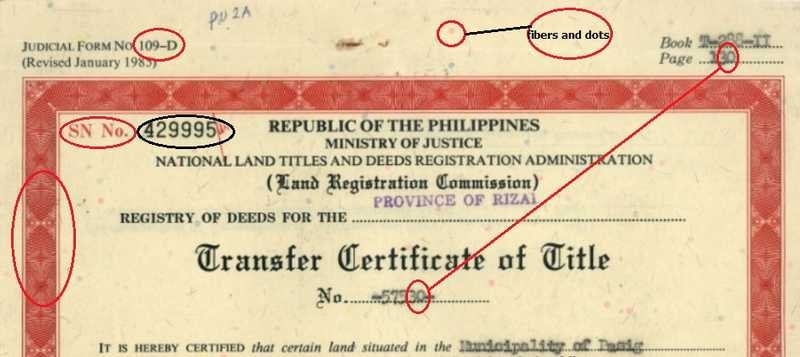
- Transfer Certificate of Title (TCT): The primary legal document proving ownership under the Torrens system.
- Owner’s Duplicate Certificate: A critical document required for any subsequent registration or transfer.
- Judicial Form Papers: Authentic titles are printed on specific judicial form papers supplied by the government, which helps in identifying forgeries.
- Annotations and Encumbrances: Any mortgages, liens, or court orders noted on the title must be carefully reviewed to avoid hidden claims.
TCT muna bago deposit slip.
Recognizing Red Flags and Warning Signs
Buyers should be cautious of unusual payment requests, such as paying reservation fees or down payments, before verifying ownership. Rushed transactions, reluctance to provide original documents, or inconsistencies in the seller’s story are common indicators of potential fraud. Awareness of these red flags can prevent buyers from becoming victims of fake title scams.
By understanding these dangers and taking proactive steps to verify property documents, buyers can protect themselves from the financial and legal pitfalls associated with fake land titles and forged deeds.
HousingInteractive: Your Shield Against Real Estate Fraud
We believe that finding a home should be an exciting milestone, not a legal gamble. We prioritize your security by maintaining a platform that emphasizes verified listings and connects you with reputable professionals who understand the rigorous requirements of title verification in the Philippines.
HousingInteractive, the Philippines’ first property portal, delivers property solutions that prioritize your peace of mind. Don’t risk a double sale—verify your future and find your legitimate investment with us today!
| Welcome to a cautionary perspective in HousingInteractive’s series, where we explore love and relationships through the lens of real estate. This approach reveals the often-overlooked risks of making commitments by drawing surprising parallels between the complexities of the property market and the journey of love and long-term relationships. Next: The Vanishing Developer |